
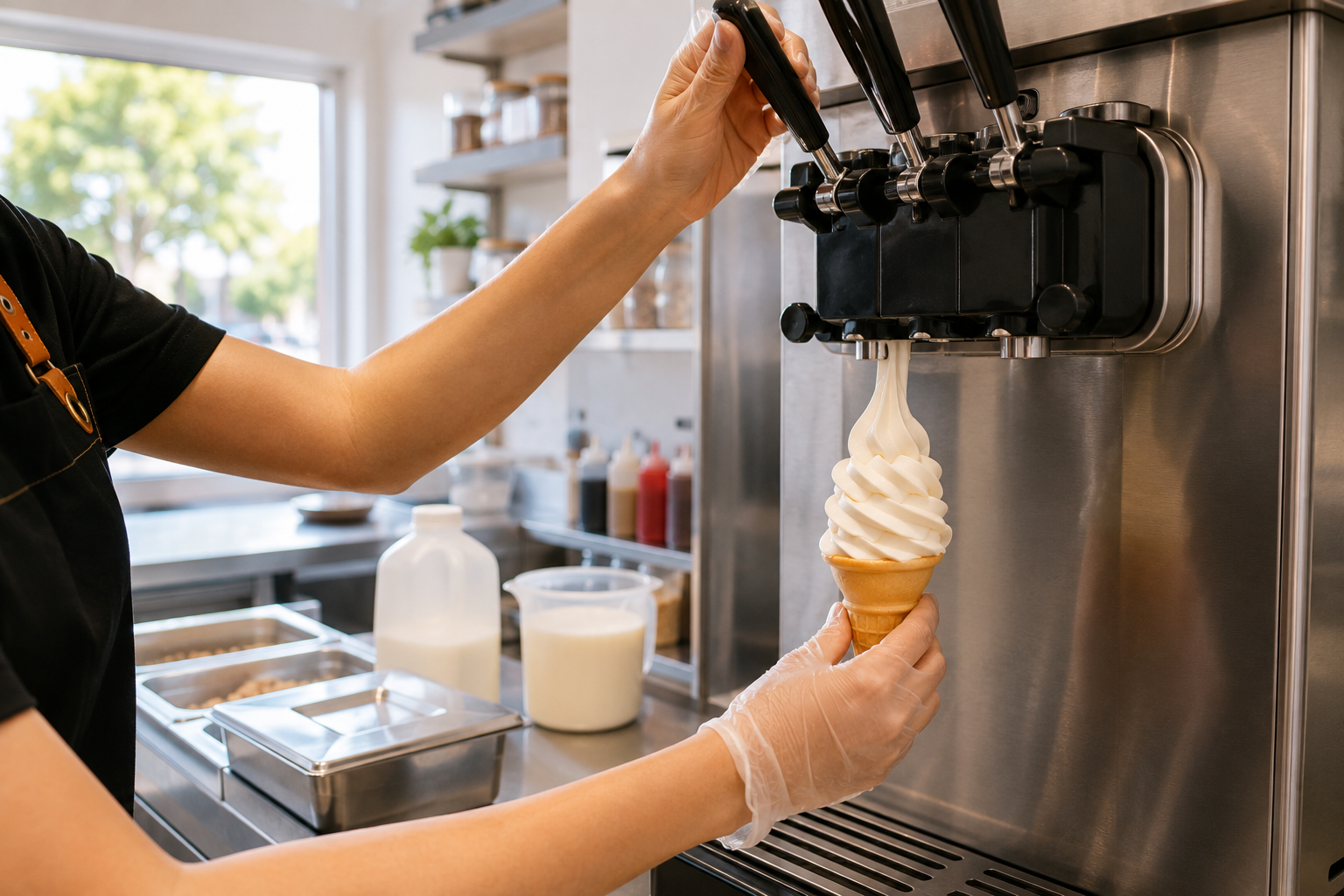
Soft serve ice cream is one of the most popular frozen desserts enjoyed across cafés, restaurants, ice cream parlors, food courts, amusement parks, and dessert outlets around the world. Known for its smooth texture, creamy consistency, and signature swirled appearance, soft serve has become a favorite choice for customers looking for a refreshing and delicious treat.
Unlike traditional ice cream, soft serve is dispensed directly from a soft serve machine and served immediately after freezing. This unique preparation process gives it a lighter texture and softer consistency, making it easy to enjoy in cones, cups, sundaes, and a variety of specialty desserts. Its attractive presentation and customizable toppings have also made it a visually appealing dessert for customers of all ages.
Today, soft serve is available in numerous flavors and is commonly paired with chocolate sauce, caramel, fruits, cookie crumbs, sprinkles, nuts, and other toppings. Many cafés and restaurants also use soft serve as the base for premium desserts, shakes, and specialty menu items.
In this guide, we'll explain what soft serve ice cream is, how it is prepared, its unique characteristics, and why it has become one of the most popular frozen desserts in the food service industry.
What is Soft Serve Ice Cream?
Soft serve ice cream is a frozen dairy dessert that is prepared using a specially formulated soft serve mix and dispensed through a soft serve machine. Unlike traditional ice cream, which is frozen and stored before serving, soft serve is produced fresh inside the machine and served immediately.
Its defining feature is its soft, smooth, and creamy texture. Because it is dispensed directly into cones or cups, soft serve develops the familiar spiral or swirled shape that has become its signature presentation.
Soft serve is enjoyed in many ways, including classic cones, cups, sundaes, waffle cones, dessert bowls, and specialty frozen treats. Its versatility allows businesses to create a wide variety of menu options using a single product.
Thanks to its refreshing taste and attractive appearance, soft serve continues to be one of the most popular desserts across the world.
How is Soft Serve Ice Cream Made?
The preparation of soft serve begins with a soft serve mix, which is blended according to the recommended instructions and poured into a soft serve machine. Inside the machine, the mixture is continuously cooled and churned until it reaches the desired consistency.
Unlike traditional ice cream, soft serve is not stored for long periods before serving. Instead, it is dispensed directly from the machine into cones or cups, ensuring a fresh and creamy texture with every serving.
The soft serve machine plays an important role by maintaining the correct temperature and continuously mixing the product. This helps produce a smooth texture and uniform consistency throughout the day.
Following the recommended preparation and machine maintenance guidelines helps ensure consistent quality and excellent serving performance.

What Makes Soft Serve Different from Regular Ice Cream?
Although both belong to the frozen dessert category, soft serve and traditional ice cream offer different eating experiences.
The most noticeable difference is texture. Soft serve is lighter, smoother, and creamier, while traditional ice cream has a firmer and denser consistency. This softer texture allows soft serve to be dispensed directly from the machine instead of being scooped.
Serving temperature is another important difference. Soft serve is served immediately after freezing, while traditional ice cream is stored at lower temperatures before serving.
Presentation also differs. Soft serve is recognized by its elegant swirled appearance, whereas traditional ice cream is usually served as scoops.
These unique characteristics make soft serve a distinctive dessert rather than simply another type of ice cream.
Popular Ways to Serve Soft Serve Ice Cream
One of the reasons soft serve remains so popular is its incredible versatility. It can be served in a variety of creative ways to suit different customer preferences and menu styles.
The classic soft serve cone continues to be one of the most recognizable presentations. It offers a simple yet satisfying dessert that appeals to customers of all ages.
Soft serve is also frequently served in cups with toppings such as chocolate sauce, caramel sauce, sprinkles, cookie crumbs, nuts, and fresh fruits. Many cafés create premium sundaes by combining soft serve with brownies, waffles, pancakes, or other desserts.
Some businesses also use soft serve in milkshakes, floats, layered parfaits, and signature dessert creations. This flexibility allows cafés and restaurants to expand their menu while using the same soft serve base.
Its ability to pair with numerous toppings and desserts makes soft serve an excellent choice for both simple and premium menu offerings.

Benefits of Using Soft Serve Mix
Using a quality soft serve mix offers several advantages for food businesses and commercial kitchens.
One of the biggest benefits is consistency. A professionally formulated mix helps produce the same smooth texture, pleasant flavor, and attractive appearance with every serving.
Preparation also becomes easier because the mix is designed for convenient use with soft serve machines. This reduces preparation time and helps simplify daily operations.
Soft serve mix also supports faster service during busy periods, allowing cafés and dessert outlets to serve customers efficiently without compromising quality.
For businesses that want reliable performance and consistent customer satisfaction, a quality soft serve mix provides a practical and efficient solution.

Where is Soft Serve Ice Cream Commonly Served?
Soft serve has become a staple menu item across many segments of the food service industry.
Ice cream parlors and dessert cafés often feature soft serve as one of their signature offerings because of its broad customer appeal and attractive presentation. Restaurants and cafés also include it as part of their dessert menu, either as a standalone item or paired with waffles, pancakes, brownies, or cakes.
Food courts, amusement parks, shopping malls, and quick-service outlets frequently serve soft serve because it can be prepared quickly and enjoyed immediately.
Its popularity extends beyond commercial businesses, with many home users also preparing soft serve using compatible equipment and ready-to-use soft serve mixes.
As demand for frozen desserts continues to grow, soft serve remains one of the most versatile and widely enjoyed options available.
Frequently Asked Questions
What is soft serve ice cream?
Soft serve ice cream is a frozen dairy dessert prepared using a soft serve mix and dispensed directly from a soft serve machine, giving it a smooth, creamy texture and signature swirled appearance.
Is soft serve different from regular ice cream?
Yes. Soft serve has a softer texture, is served immediately after freezing, and is dispensed directly from a machine, while traditional ice cream is firmer and served by scooping.
Can soft serve be served with toppings?
Yes. Popular toppings include chocolate sauce, caramel sauce, fresh fruits, cookie crumbs, sprinkles, nuts, and whipped cream.
What equipment is required for soft serve?
Soft serve is prepared using a dedicated soft serve machine designed to freeze, churn, and dispense the product.
Is soft serve suitable for cafés and restaurants?
Absolutely. Soft serve is widely used in cafés, restaurants, dessert parlors, food courts, and ice cream outlets because of its versatility and customer appeal.
Conclusion
Soft serve ice cream is much more than just a frozen dessert—it is a versatile menu item that combines smooth texture, creamy consistency, and attractive presentation in every serving. Its ability to be served fresh from a soft serve machine, paired with countless toppings, and incorporated into a variety of desserts has made it a favorite among both customers and food businesses.
Whether enjoyed in a classic cone, a premium sundae, or alongside waffles and brownies, soft serve continues to deliver a refreshing and satisfying dessert experience. With the help of a quality soft serve mix and proper preparation, cafés, restaurants, and dessert outlets can consistently serve delicious soft serve that keeps customers coming back for more.