
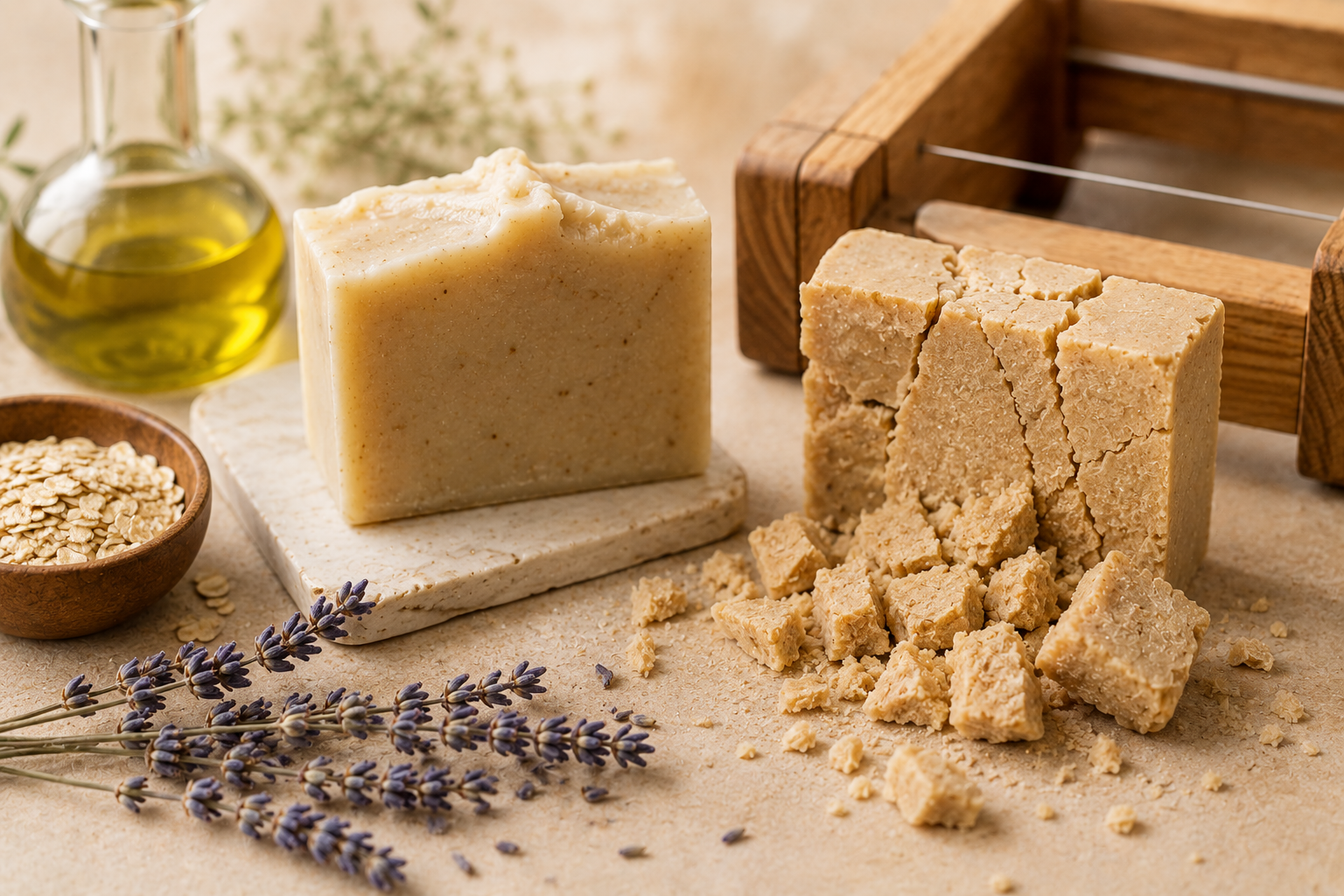
Handmade soap making is both a creative hobby and a rewarding business, but even experienced soap makers occasionally encounter problems during production. One of the most common issues is soap becoming crumbly, brittle, or breaking apart when cut or used. Instead of smooth, firm bars, the soap may crack at the edges, fall apart during slicing, or feel dry and fragile.
A crumbly soap bar can be disappointing, especially after investing time, quality ingredients, and effort into the batch. Fortunately, this problem is usually caused by one or more identifiable factors, and in many cases, it can be prevented or corrected with the right techniques.
In this guide, we'll explore the most common reasons why handmade soap becomes crumbly, how to troubleshoot the problem, and practical tips to help you create smooth, durable soap bars every time.
What Does Crumbly Soap Mean?
Crumbly soap refers to a soap bar that breaks apart easily instead of maintaining a smooth, solid structure. Rather than cutting cleanly, the soap may chip, crack, or crumble into small pieces.
This issue can occur in both cold process and melt and pour soap making, although the causes are often different. In cold process soap, formulation or curing issues are common reasons, while in melt and pour soap, overheating or improper handling may lead to brittle soap.
Understanding when the crumbling occurs—during unmolding, cutting, curing, or use—can help identify the underlying cause more accurately.
Common Reasons Handmade Soap Becomes Crumbly
Several factors can contribute to crumbly handmade soap. Identifying the actual cause is the first step toward preventing the issue in future batches.
Incorrect Lye Calculation
In cold process soap making, accurate lye calculation is essential. Using too much lye or incorrect measurements can affect the structure of the finished soap, making it dry and brittle.
Always use a reliable soap calculator and measure ingredients precisely using a digital scale rather than estimating quantities.
Too Little Water in the Recipe
Using a high lye concentration or reducing the water content too much can cause the soap to harden very quickly. This often results in soap that becomes brittle during cutting or curing.
Following a well-tested recipe and avoiding unnecessary water discounts is especially important for beginners.
Excessive Hard Oils or Waxes
Hard oils and waxes help create firm soap bars, but using them in excessive amounts can make the soap overly hard and more likely to crumble.
Maintaining a balanced blend of hard and soft oils helps produce soap with good structure and durability.
Overheating the Soap Base
For melt and pour soap making, overheating the soap base can affect its texture. Excessive heat may cause moisture loss, making the finished soap dry and more prone to cracking or crumbling.
Heat the soap base slowly using short microwave intervals or a double boiler, stirring gently until fully melted.
Cutting the Soap Too Late
If cold process soap is left in the mold for too long before cutting, it may become very hard. Attempting to cut overly hard soap often leads to chipped edges and crumbling.
Cut the soap when it is firm enough to hold its shape but still soft enough to slice cleanly.
Incorrect Additive Usage
Adding excessive amounts of powders, clays, herbs, or exfoliants can sometimes affect the structure of handmade soap.
Always follow recommended usage rates for additives and test new ingredients in small batches before scaling up production.

How to Fix Crumbly Handmade Soap
The solution depends on the reason behind the problem. In many cases, future batches can be improved by making small adjustments to the formulation or process.
Review Your Recipe
If the soap is consistently crumbly, review the entire recipe. Double-check ingredient ratios, lye calculations, and water amounts to ensure everything is correctly balanced.
Measure Ingredients Accurately
Use a digital kitchen scale for every ingredient. Even small measurement errors can affect the final texture of handmade soap.
Avoid Overheating
Whether you're melting a soap base or preparing oils, avoid exposing ingredients to unnecessary heat. Gentle heating helps preserve the quality and consistency of the soap.
Improve Cutting Timing
For cold process soaps, monitor the firmness of the loaf and cut it at the appropriate time. Waiting too long can make cutting much more difficult.
Test Small Batches
Before making large quantities, test any new recipe or ingredient combination in a small batch. This allows you to identify potential issues without wasting materials.

Can Crumbly Soap Still Be Used?
In many situations, yes. If the soap is properly formulated and safe to use, crumbling mainly affects its appearance rather than its cleansing ability.
Small broken pieces can often be used at home, placed in soap saver bags, or melted and repurposed if they are made from a compatible melt and pour base.
However, if you suspect the soap has formulation errors—especially incorrect lye measurements—it should be evaluated carefully before use.
Tips to Prevent Handmade Soap from Crumbling
Preventing crumbly soap is usually easier than fixing it afterward. A few good manufacturing practices can make a significant difference in the quality of your finished bars.
Always follow a tested soap recipe.
Measure ingredients accurately using a digital scale.
Avoid overheating melt and pour soap bases.
Use balanced oil combinations in cold process soap.
Cut soap at the correct stage of firmness.
Store curing soaps in a cool, dry, and well-ventilated area.
Test new additives before using them in large batches.
Consistency in your soap-making process helps produce stronger, smoother, and more professional-looking soap bars.
Common Mistakes Beginners Make
Many beginners assume that making soap harder automatically improves its quality. In reality, excessive hard oils, reduced water, or incorrect lye calculations can increase the risk of crumbling.
Another common mistake is rushing the process. Whether it's overheating the soap base or cutting the soap at the wrong time, impatience often leads to avoidable problems.
Skipping accurate measurements or experimenting with too many new ingredients in a single batch can also make troubleshooting much more difficult.
Keeping detailed notes for each batch is one of the best ways to learn from experience and improve future results.
Frequently Asked Questions
Why Is My Handmade Soap Crumbling When I Cut It?
Soap may crumble during cutting if it has become too hard, contains too little water, or has an unbalanced formulation.
Can Overheating Melt and Pour Soap Cause Crumbling?
Yes. Excessive heat can affect the texture of melt and pour soap, making it more brittle after cooling.
Does Too Much Lye Make Soap Crumbly?
Incorrect lye measurements can affect soap structure. Always calculate and measure lye carefully using a reliable soap calculator.
Can I Save a Crumbly Batch of Soap?
Depending on the cause, crumbly soap may still be usable or repurposed. However, if there is a formulation error involving lye, the soap should be checked carefully before use.
How Can I Prevent Handmade Soap from Crumbling?
Using accurate measurements, balanced recipes, proper heating methods, and correct cutting times are the best ways to prevent crumbly soap.
Conclusion
Crumbly handmade soap is a common challenge, especially for beginners, but it is usually caused by issues that can be identified and corrected. Factors such as incorrect measurements, excessive hard ingredients, overheating, improper cutting, or formulation imbalances can all contribute to brittle soap bars.
By understanding these causes and following proven soap-making practices, you can consistently produce smooth, durable, and professional-quality handmade soaps. Careful measuring, patience during the process, and testing small batches will help you avoid common mistakes and achieve better results with every batch.