
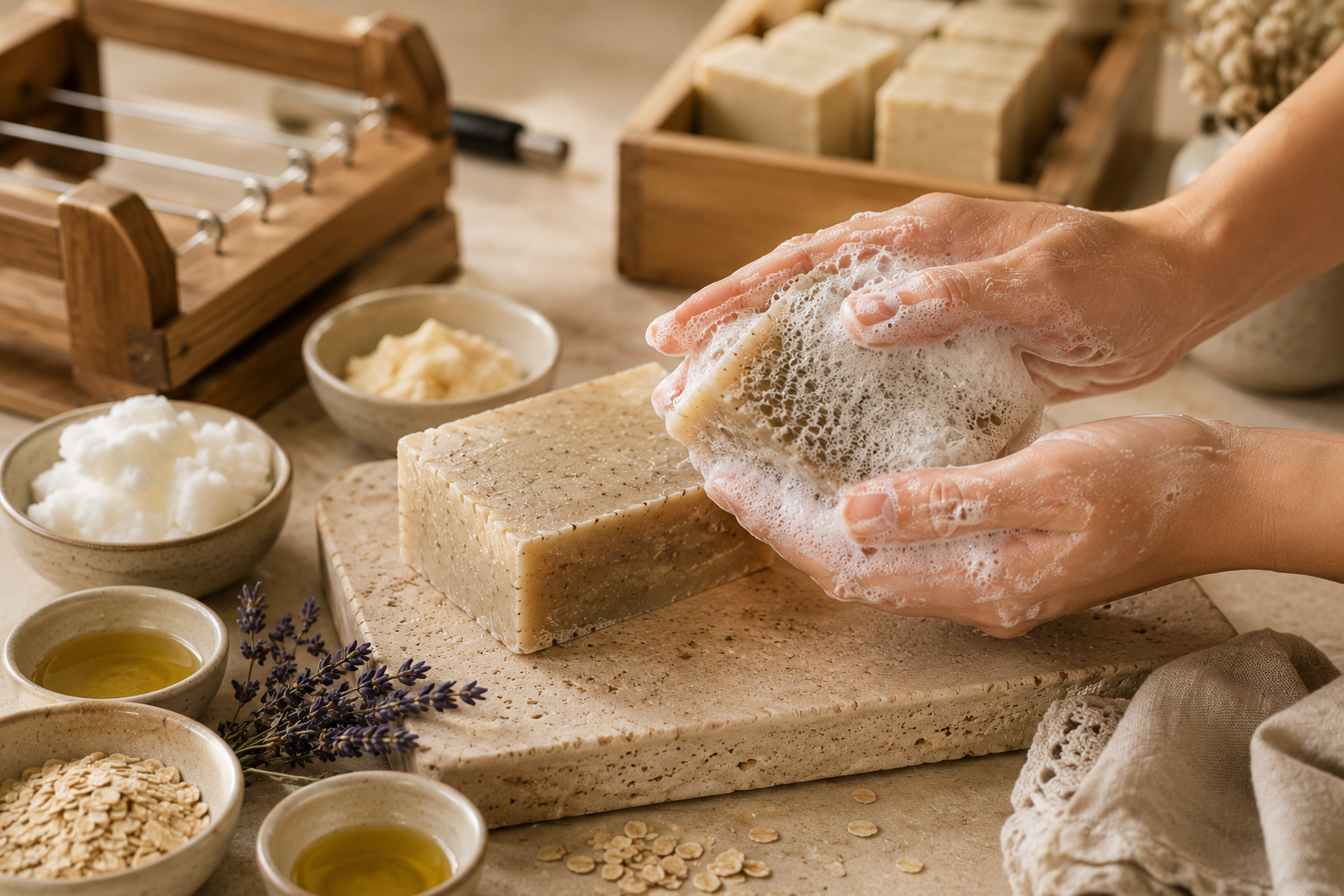
One of the most common expectations people have from a soap bar is rich, satisfying lather. Whether it is a handmade soap crafted at home or a premium artisan soap sold by a small business, consumers often associate abundant foam with a pleasant cleansing experience. While handmade soaps can be highly customizable and visually appealing, many beginners notice that their soaps sometimes produce less lather than expected.
The amount of foam a soap creates depends on several factors, including the ingredients used, the soap-making method, formulation balance, and curing process. Understanding these factors can help soap makers improve the overall performance of their products without compromising quality.
If you are struggling with low-lather soap bars or simply want to create soaps with a richer foaming experience, this guide will help you understand the key factors that influence soap lather and how to improve it effectively.
What Creates Lather in Soap?
Lather is produced when soap interacts with water and air during use. The cleansing agents within the soap help reduce the surface tension of water, allowing bubbles to form more easily.
Different ingredients contribute different characteristics to the lather. Some ingredients help create large fluffy bubbles, while others produce a dense, creamy foam. A well-balanced soap formulation often combines multiple ingredients to achieve the desired lather profile.
It is important to understand that more foam does not necessarily mean better cleansing performance. However, many users prefer soaps that generate a rich and pleasant lather because it enhances the overall bathing experience.
Why Some Handmade Soaps Produce Less Foam
Many beginners are surprised when their handmade soaps produce less foam than commercial soaps. This is often due to differences in formulation rather than a product defect.
Handmade soaps are usually created with a focus on customization and ingredient selection. Depending on the oils and additives used, the resulting soap may naturally produce less visible foam.
Several factors can affect lather production, including:
- Soap formulation
- Choice of oils
- Superfat levels
- Water quality
- Curing time
- Additives used in the recipe
Understanding these factors can help identify why a soap may not be producing the desired amount of foam.

Choose Soap Bases Designed for Better Lather
For melt and pour soap makers, selecting the right soap base is one of the easiest ways to improve lather.
Different soap bases have different performance characteristics. Some are specifically formulated to provide better foam and bubble production. Transparent soap bases, glycerin soap bases, and specialty foaming soap bases are often chosen by handmade soap makers looking for improved lather performance.
When purchasing a soap base, reviewing the manufacturer's specifications can help identify products designed to create a richer foaming experience.
Using a quality soap base often provides a better starting point than trying to correct lather issues later in the process.
Use Ingredients That Support Foam Production
Many soap makers include specific ingredients in their formulations to improve bubble formation and overall lather quality.
Certain oils are commonly selected because they contribute to a richer and more abundant foam. The balance of oils within a formulation can significantly influence the final lather characteristics of the soap.
Some soap makers also experiment with natural additives and specialty ingredients designed to support foam production. The key is maintaining a balanced formulation rather than adding excessive amounts of any single ingredient.
Testing small batches is often the best way to determine which ingredients work best for your specific recipe.
Allow Proper Curing Time
Curing is an important part of traditional soap making and can have a significant impact on soap performance.
Many beginners use their soap too soon after production. In cold process soap making, curing allows excess moisture to evaporate and helps improve the overall quality of the finished soap.
Properly cured soap bars often perform more consistently and may produce a better lather compared to freshly made soaps. Patience during the curing process is often rewarded with improved soap characteristics.
The exact curing time varies depending on the formulation and soap-making method being used.
Avoid Excessive Superfat Levels
Super fatting is a common soap-making technique, but extremely high superfat levels can sometimes influence lather characteristics.
When a large percentage of oils remains unsaponified, it may affect the balance between cleansing and foam production. This is why many experienced soap makers carefully adjust superfat levels based on their formulation goals.
A balanced approach generally produces better results than using excessive superfat percentages. Understanding how superfatting affects soap performance can help improve consistency and lather quality.
For beginners, following tested formulations is often the safest approach.
Use Fragrances and Additives Carefully
While fragrances, colorants, herbs, clays, and decorative ingredients can enhance the appearance of handmade soaps, they may also influence soap performance.
Adding excessive amounts of additives can sometimes interfere with the soap’s ability to produce a rich lather. This is especially true when multiple additives are combined in a single formulation.
The goal is to create a balance between aesthetics and performance. Professional soap makers often test additives carefully before incorporating them into larger production batches.
Using additives within recommended levels helps maintain both appearance and functionality.
Improve User Experience Through Better Soap Design
Sometimes improving the perceived lather experience involves more than simply increasing bubble production.
The shape of the soap, texture of the surface, and overall design can influence how the soap feels during use. Smooth, well-cured soap bars often provide a more pleasant experience, even if the amount of foam remains unchanged.
Creating attractive soaps with quality ingredients and balanced formulations can enhance customer satisfaction and encourage repeat purchases.
For handmade soap businesses, the overall experience is often just as important as the quantity of foam produced.

Common Mistakes That Reduce Soap Lather
Many lather-related issues are caused by simple formulation or production mistakes.
Some common problems include:
- Using unsuitable soap bases
- Poor ingredient selection
- Excessive additives
- Inadequate curing time
- Unbalanced formulations
- Improper storage conditions
Identifying and correcting these issues can significantly improve soap performance over time.
Keeping detailed production records can help soap makers troubleshoot and refine their recipes more effectively.
Tips for Creating Richer Lather in Handmade Soap
Small improvements can often make a noticeable difference in foam quality and user experience.
- Some helpful practices include:
- Start with a high-quality soap base.
- Use balanced and tested formulations.
- Allow adequate curing time.
- Avoid excessive additives.
- Maintain consistent production methods.
- Test small batches before scaling up.
Over time, experimentation and record-keeping can help soap makers discover the ideal formulation for their desired lather profile.
Frequently Asked Questions
Why Does My Handmade Soap Produce Less Foam?
Low foam can result from formulation choices, ingredient selection, curing time, water quality, or excessive additives.
Does More Foam Mean Better Cleaning?
Not necessarily. Foam and cleansing performance are not always directly related. Some soaps clean effectively even with moderate lather.
Which Soap Base Produces Better Lather?
Many soap makers choose specialty foaming bases, transparent soap bases, or glycerine soap bases designed to enhance lather production.
Can Additives Affect Soap Foam?
Yes. Excessive amounts of certain additives may influence lather quality and overall soap performance.
Does Curing Improve Soap Lather?
In traditional soap-making methods, proper curing can improve the overall quality and consistency of the finished soap.
Conclusion
Rich foam and satisfying lather are important characteristics that many consumers look for in handmade soaps. While lather production depends on multiple factors, understanding the role of ingredients, soap bases, curing time, and formulation balance can help soap makers achieve better results.
Whether you are creating soaps for personal use or building a handmade soap business, focusing on quality ingredients and proven soap-making techniques can significantly improve the user experience. With careful formulation, testing, and patience, it is possible to create handmade soaps that offer both beautiful presentation and enjoyable lather performance.